
The Centre for International Studies (CEI) is a Research Centre of Iscte – University Institute of Lisbon. CEI-Iscte is the successor of the Centre for African Studies, which was founded in 1981 and became a leading institution for African Studies in Portuguese-speaking countries.
CEI's research provides insights and potential solutions to critical issues in the fields of political systems, sustainability, citizenship and security. The centre is structured into three core research groups:
- Global Politics and Security
- Democracy, Activism, and Citizenship
- Sustainable Societies
Research groups are, in turn, framed by five regional lines: Africa; Asia; Europe and Transatlantic Relations; Latin America and Middle East & North Africa.
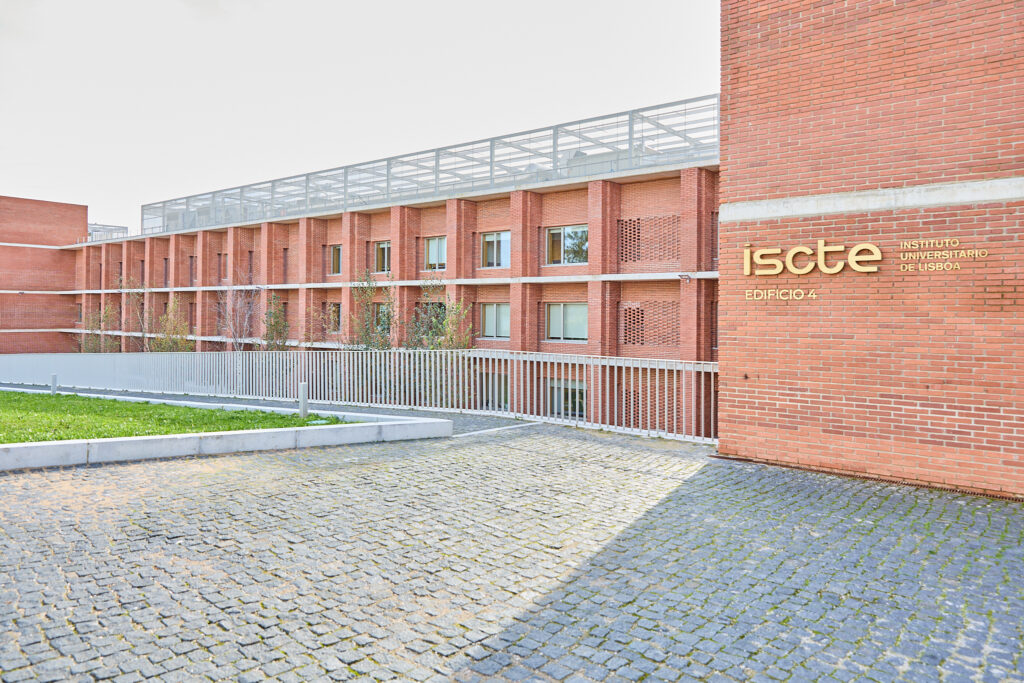
Iscte hosts the only PhD in African Studies in Portugal and a Master’s degree since 1992/93. These interdisciplinary programmes focus on cultural, political, cultural and economic topics in Sub-Saharan Africa and in its diaspora.
Building upon previous expertise and contacts established over the years, CEI-Iscte maintains a variety of partnerships with African academic and research institutions, particularly in African Lusophone countries. The Amilcar Cabral Centre for Social Studies (CESAC) in Guinea-Bissau is one illustrative example.
ECAS 2027 “African Prisms”
 CEI-Iscte organizes the 2027 edition of the European Conference on African Studies (ECAS), under the theme “African Prisms”. The conference is chaired by Ana Lúcia Sá and co-chaired by Pedro Seabra. ECAS 2027 aims to speak to the multiplicity of disciplines, perspectives, methods, histories, and images that shape the contemporary study of Africa. Metaphorically, a prism can generate multiple clarifying or distorting viewpoints of our understanding of the world. Similarly, African societies, histories, and expressions can also be viewed through a wide array of analytical and disciplinary lenses, each uncovering new dimensions of meaning and possibility. We look forward to having you in Lisbon from 30th June to the 3rd July 2027.
Central Library of African Studies
The Central Library of African Studies (Biblioteca Central de Estudos Africanos) is a joint effort of four portuguese research centers on African Studies, including the Centre for International Studies. The library is located within the Library of Iscte, and contains over 16 thousand volumes.
Journal Cadernos de Estudos Africanos
 Cadernos de Estudos Africanos is a scientific and academic publication specialisingin African themes and is led by Vasco Martins.The articles, both based on fieldwork and theoretical elaboration, are guided by the significant contributions they make to studies on Africa and African diasporas. Cadernos de Estudos Africanos is open to the national and international scientific community that studies the continent, particularly in the areas of Social Sciences and Humanities, focusing on internationalisation and inter- and multidisciplinarity.
Research at the Centre
CEI-Iscte hosts of several research projects. One of them is the European Research Council-funded project The Afterlives of Development Interventions in Eastern Africa (AfDevLives), regionally focused in Kenya, Tanzania, and Mozambique).
(ERC, Grant agreement ID: 101041788, DOI: 10.3030/101041788)
Project AfDevLives explores how development interventions’ representational and material remains are experienced, utilized, and re-appropriated by local actors over time, and how such active immanence of the past affects people’s life-worlds. Mainstream development interventions emphasize forward-looking ideas of progress and advocate for novelty. In so doing, however, the sector is often myopic, as evidenced by countless unintended consequences that stretch beyond interventions’ official life cycle. Whether deemed as success or failure, such interventions leave behind a long trail of tangible and intangible traces. The project weaves together three temporal gazes: prospective (development’s blueprints); retrospective (sediments of the past, shorthanded as interventions’ ‘afterlives’); and present-time lived experience. Using an interdisciplinary approach centered on social anthropology, research is conducted in Kenya, Tanzania, and Mozambique, neighbouring Eastern African countries that are among the highest recipients of development aid and whose past and present hold both continuities and ruptures. The project pursues three categories of objectives: conceptual (methodological toolkit), empirical (based on extensive ethnographic fieldwork), and practical (aimed at the development sector, local heirs of interventions, and the public at large).